The buzz around Is Bollywood selling religion, nostalgia or spectacle? The three audiences Ramayana must satisfy to become a historic blockbuster refuses to die down. From social media chatter to box office projections, everyone in the industry seems to have an opinion — and the latest update only strengthens the conversation.
The Story So Far
Add as a preferred source on Google A family walks into a silver major screen to watch Ramayana: Part One. The grandfather wants to see a respectful portrayal of Lord Rama. The parents hope to experience the narrative they grew up watching on television, this time on a spectacular major major screen.
Their teenage children are thrilled about the visual effects, action sequences and the prospect of watching Ranbir Kapoor and Yash in an epic confrontation. All four are buying tickets for the same movie. But are they really buying the same experience?
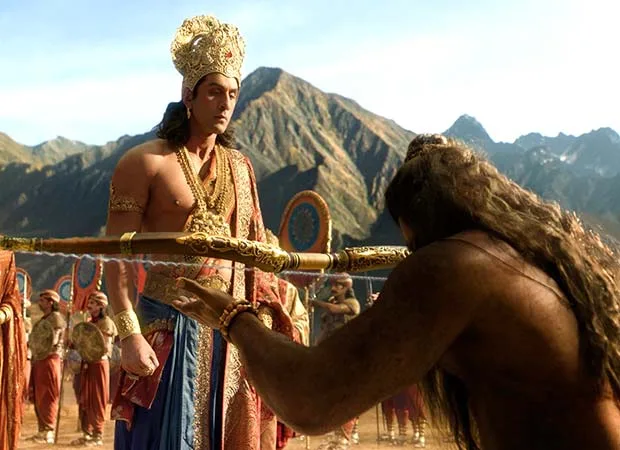
This is perhaps the most fascinating commercial challenge facing Nitesh Tiwari's Ramayana, which is scheduled to arrival on November 5. The movie is attempting to attract audiences whose reasons for watching may be fundamentally different. For some, the Ramayana is a sacred narrative.
For others, it evokes powerful childhood memories. And for a younger generation accustomed to Hollywood spectacles and contemporary action blockbusters, it represents the possibility of experiencing Indian mythology on an unprecedented cinematic scale. Religion, nostalgia and spectacle – three powerful motivations, but not always compatible expectations.
If Ramayana can satisfy all three, it could achieve something extraordinary. viewers one: Those who come for faith and tradition For a significant section of Indian audiences, the Ramayana is not merely a narrative. It is deeply connected to religious beliefs, family traditions and cultural identity.
These viewers may approach the movie with expectations that differ from those associated with a conventional entertainer. They may place particular importance on the portrayal of Lord Rama, Sita, Hanuman and other revered figures. lines, costumes, characterisation and the overall tone could matter as much as the visual spectacle.
For such audiences, technical excellence cannot compensate for a portrayal they consider emotionally or culturally unconvincing. The makers must ensure that their interpretation feels respectful and emotionally authentic without reducing the movie to a purely devotional presentation. After all, a theatrical feature requires dramatic momentum, compelling performances and cinematic storytelling.
viewers two: Those who come for nostalgia The second significant viewers consists of viewers who grew up with the Ramayana through television, books, family storytelling and cultural traditions. For many Indians, Ramanand Sagar's television adaptation remains an important reference point. The series became a revealed viewing experience for families and helped establish enduring major screen images of the characters.
A fresh cinematic adaptation inevitably invites comparisons with these memories. However, nostalgia is a double-edged sword. It can generate enormous anticipation because audiences want to revisit something they love.
But it can also create expectations that are almost impossible to satisfy. A viewer who has carried a particular image of Lord Rama…
For now, fans have plenty to discuss, and the industry has plenty to analyse. TeraMovies will be tracking every twist in this story as it unfolds, bringing you the full picture from the world of entertainment.